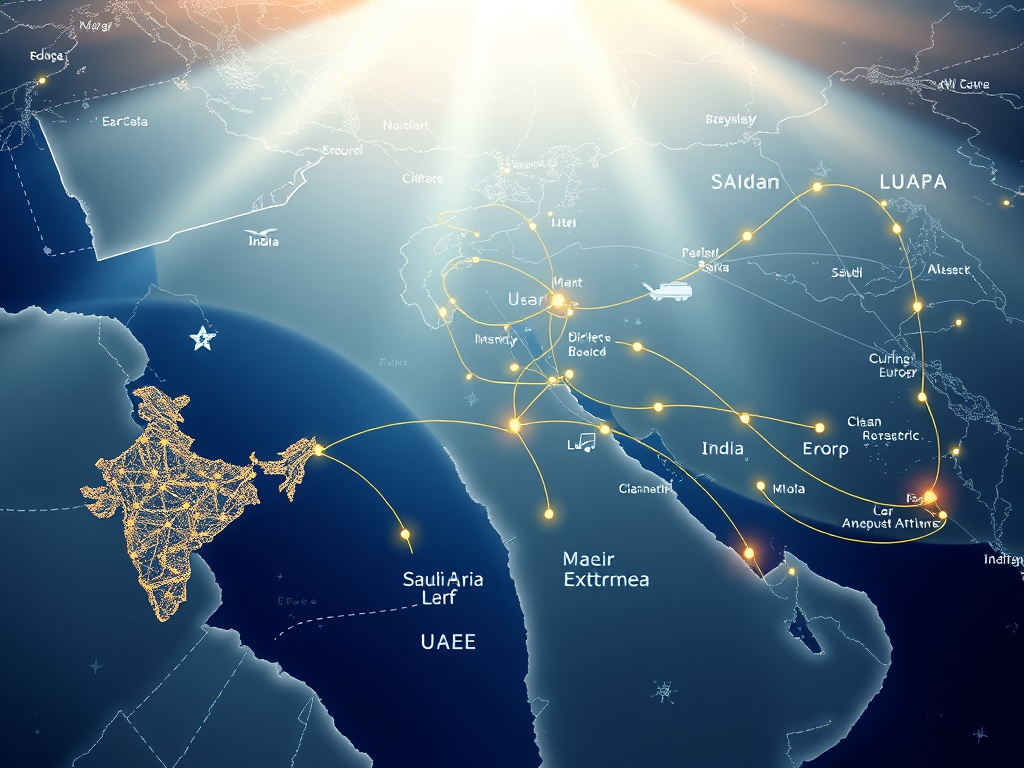
The 2024 expansion of BRICS marks a significant consolidation of multipolarity. With the inclusion of Saudi Arabia, Iran, and Egypt, the grouping now represents roughly 45 % of the world’s population and 35% of global GDP when measured at purchasing power parity.
With the addition of Iran and the United Arab Emirates, the bloc has grown its combined oil production by nearly 50 % and now accounts for almost 30 % of global oil output, according to the Energy Institute1 leading to strengthening its economic and geopolitical weight. This expansion reinforces South-South cooperation and the rise of middle powers seeking greater representation in global governance
However, expansion does not automatically translate into an active challenge to Western-led institutions. BRICS advances reformist demands particularly regarding representation and financial governance rather than outright institutional rejection. India’s 2026 presidency will be decisive in shaping whether BRICS evolves into a pragmatic reform platform or drifts toward geopolitical polarization.

BRICS-Brazil, Russia, India, China, and South Africa; was conceived as a coalition of emerging economies advocating reform of global financial and political institutions. Its agenda has consistently centred on development cooperation, institutional recalibration, and enhancement of Global South representation.
The 2024 expansion marks a structural inflection point, it broadens BRICS’s geographic representation across Latin America, Eurasia, South Asia, Africa, and West Asia. By doing so, it strengthens the narrative of multipolarity and middle-power coordination.
External Affairs Minister of India- S. Jaishankar captured this reformist thrust succinctly: “UN today still reflects realities of 1945, not of 2025; it must reform” This framing is crucial to understand the stance of the global south. BRICS nations do not reject multilateralism; they contest the long -standing imbalance.

Note: Chart does not include Saudi Arabia as part of BRICS. Saudi Arabia was invited to join BRICS in 2023, but as of July 2025 had not formally accepted the invitation.
This pie chart indicates that BRICS is evolving into a political platform where alternative norms, policy priorities, and cross-regional coalitions are being articulated and consolidated. In doing so, it reflects a gradual redistribution of soft power-one that challenges established hierarchies and resonates with states seeking greater strategic autonomy within an increasingly multipolar order.
Strategic Analysis
The analytical question is not whether BRICS is expanding; but whether this expansion constitutes systemic change.
Reform or Replacement
BRICS does challenge Western dominance especially in finance and trade governance by advocating reforms in Bretton Woods institutions like IMF and World Bank. However it does not aim for their dissolution rather calls for redistribution of voice and representation to counter hegemony of west.
The establishment of the New Development Bank (NBD) reflects the intentional approach. The NBD provides an alternative financing mechanism for development specifically for infrastructure and sustainable development. Yet institutional asymmetry persists.
| Dimension | Western Institutions | BRICS Mechanisms (NDB) |
| Financial Scale | Deep capital base and long-standing integration | Smaller lending capacity |
| Governance | Rule-bound, treaty-based frameworks | Consensus-driven coordination |
| Institutional Depth | Decades of operational embedding | Emerging institutional consolidation |
BRICS currently supplements rather than replaces Western institutions
De-Dollarization: Structural Threat or Strategic Diversification?
Expansion of BRICS has intensified the discussions on reducing dependence on Western currencies especially the U.S. Dollar. Initiatives toward local currency trade represent financial hedging. However
- Reserve currency dominance remains embedded 14
- Global financial infrastructure remains Western-centric11
- Transition costs are high
Thus, de-dollarization appears incremental rather than a complete transformation. Precisely, de-dollarization acts as an initiative to balance the economic order and strategically diversify it rather than complete monetary revolution.
Power Redistribution or Systemic Change?
BRICS expansion strengthens dialogue among states that perceive structural imbalance in global governance. It represents normative resistance of hegemonic dominance. However, for a systemic change it is necessary to have:
- Institutional cohesion
- Unified strategic direction
- Enforcement capability
Internal divergences constrain rapid transformation. BRICS is therefore more effective as a platform of collective voice than as a complete replacement architecture.
India’s 2026 Presidency: Strategic Balancing in an Expanding Bloc
India’s 2026 presidency arrives a structurally delicate moment for both BRICS and India. The expansion has attracted traction and visibility in the geopolitical sphere but has also intensified asymmetries and external pressures. With U.S. A’s unpredictable policies and tariff application it becomes crucial for India to act strategically. The presidency is less about symbolic leadership but more about strategic direction setting.
For India BRICS has been an instrument of calibrated influence rather than pure ideological alignment. Its engagement showcases a broader doctrine of strategic autonomy along with deepening South-South cooperation and preserving partnerships with the Western powers. This dual engagement and balance is what makes India stand out from other BRICS members primarily in counter Western terms.
Scholarly assessments highlight that India has often used BRICS to balance internal power hierarchies particularly in managing China’s coalition-building and agenda-shaping rather than overt confrontation. This pattern is likely to continue in its presidency as well.
Expansion also raises risks of internal imbalance; hence India’s leadership will need to prioritise institutional equilibrium. Economically, India’s engagement with BRICS has expanded though asymmetrically. Trade patterns indicate significant interaction with fellow members especially China; diversification across other BRICS economies remains a gradual process. This creates both a leverage and constraint as- participation strengthens India’s voice within the grouping but structural imbalances persist.
Strategic Openings
India’s presidency presents three calibrated opportunities:
- Reframing Expansion as Reform: India can anchor BRICS discourse around institutional reform and Global South representation rather than systemic rupture.
- Managing Internal Asymmetry: Through agenda control and coalition diplomacy, India can prevent concentration of influence within the bloc.
- Preserving Normative Credibility: Avoiding overt anti-West positioning will protect India’s economic and strategic partnerships beyond BRICS
Structural Constraints
India’s broader economic interdependence with Western markets limits the feasibility of institutional decoupling. Moreover, strategic competition with China remains an enduring reality. An overtly revisionist BRICS would complicate India’s multi- aligned foreign policy. The 2026 presidency will therefore test whether India can consolidate BRICS as a platform of negotiated multipolarity rather than ideological polarization. The real measure of success will lie not in expansion alone, but in India’s ability to translate expansion into structured, balanced multilateralism.
| Risks | Strategic Implications |
| Bloc Polarization | May push BRICS toward overt anti-West alignment, reducing India’s diplomatic flexibility |
| Chinese Institutional Dominance | Risk of agenda capture or asymmetric influence within expanded BRICS |
| Over-politicization of Expansion | Could dilute development agenda and weaken institutional credibility |
| Opportunities | Strategic Gains |
| Agenda-Setting Authority | Ability to shape norms around reform, development finance, and institutional coherence |
| South-South Consolidation | Enhanced diplomatic capital among emerging and developing economies |
| Reform Leadership | Positioning India as mediator between Global South and Western institutions |
Key Risks
- Bloc Polarization: If BRICS is framed as an anti-West coalition, India’s engagement with Western economies could be constrained. India’s foreign policy is rooted in strategic autonomy, not alignment politics; ideological hardening would reduce its diplomatic flexibility.
- Chinese Institutional Dominance: China’s economic weight within BRICS creates the risk of agenda asymmetry. Without strong consensus-based procedures, informal hierarchy could consolidate.
- Over-Politicization: Excessive geopolitical positioning may dilute BRICS’ development-focused mandate, weakening its legitimacy as a reform platform.
Strategic Opportunities
- Agenda-Setting Authority: India can prioritize development finance, digital public infrastructure, climate finance, and reform of global financial governance.
- South-South Consolidation: Leadership enhances India’s credibility as a bridge-builder within the Global South.
- Reformist Positioning: By advocating reform not replacement of institutions such as the IMF and World Bank, India can act as a systemic stabilizer rather than a disruptor.
Strategic Paradox
India must prevent polarization while ensuring BRICS remains reform-oriented and institutionally credible.

Recommendations
Three priorities should anchor India’s approach:
- Should India guide the widening of BRICS, substance ought to outweigh symbolism. Prioritizing development funding alongside digital frameworks may lend durability where rhetoric might falter. Climate responsiveness, paired with shifts in decision- making structures, could ground growth in measurable outcomes instead of strategic posturing. Expansion stands a better chance if shaped by practical alignment, not positional rivalry.
- Structural design matters when shaping fair processes. To reduce imbalance, India may adopt fixed steps that guide how choices take place. Where power risks tilting toward one side, built-in checks help maintain balance. Consensus grows more likely if rules exist ahead of conflict. Fairness gains strength when methods are clear from the start.
- With leadership in BRICS, India finds space to deepen involvement in Western-led organizations. Instead of choosing sides, it advances stability through continued collaboration with the IMF and World Bank. Engagement does not mean alignment; rather, it reflects strategic consistency. Balance emerges through sustained presence across differing blocs.
Conclusion
What began as an informal alliance now shows signs of lasting institutional form. With nearly half the planet’s people inside its fold, alongside more than one-third of worldwide output, influence shifts quietly but steadily. Cooperation among nations once on the margins gains ground through shared goals rather than grand declarations. A different pattern emerges when emerging economies shape terms themselves. Ten years back, such alignment appeared remote, even impractical. Now, coordination among middle powers unfolds with growing routine.
Yet growth does not equal dismantling. Limits arise from uneven institutions and conflicting priorities within emerging systems, slowing shifts away from Western centered models. A clear example appears in the New Development Bank: active function exists, progress occurs, still short of deep change.
Ahead of India’s 2026 leadership role, the form of a shifting global balance begins to take shape. Should BRICS advance structured cohesion alongside practical adjustments, its presence could align constructively within broader international shifts. If division dominates instead, growth might intensify disarray – diluting coherence more than enabling balanced influence. The moment hinges less on size, more on direction chosen. Multipolarity is advancing. Its stability will depend not on numerical expansion but on institutional coherence and strategic stewardship.