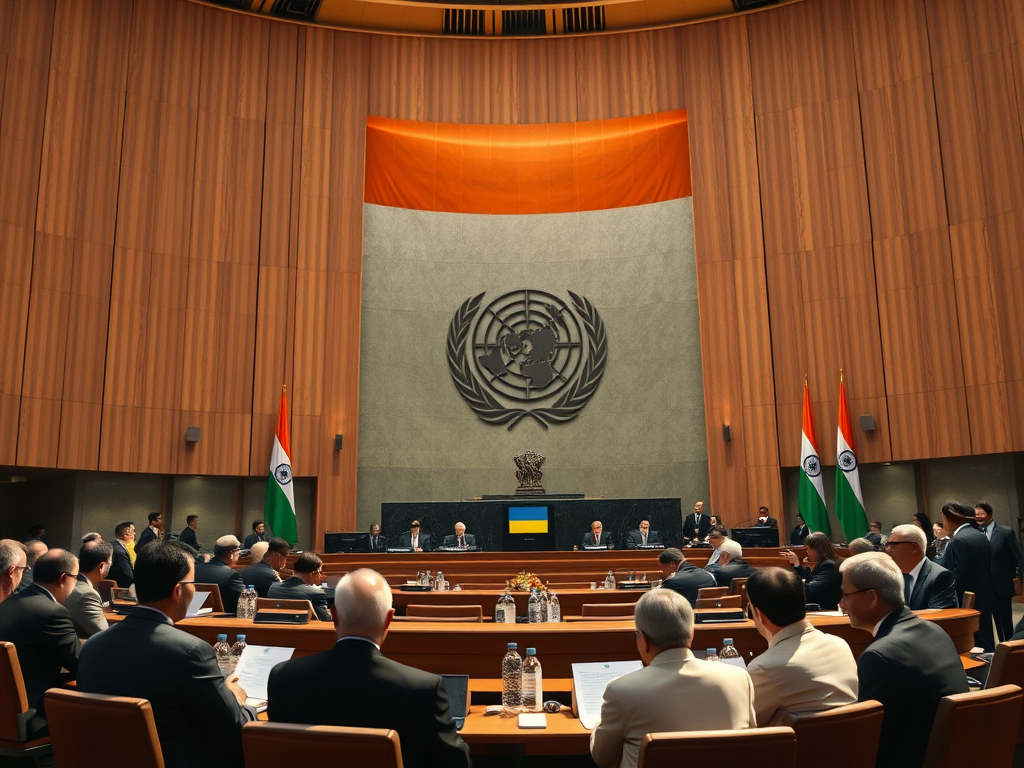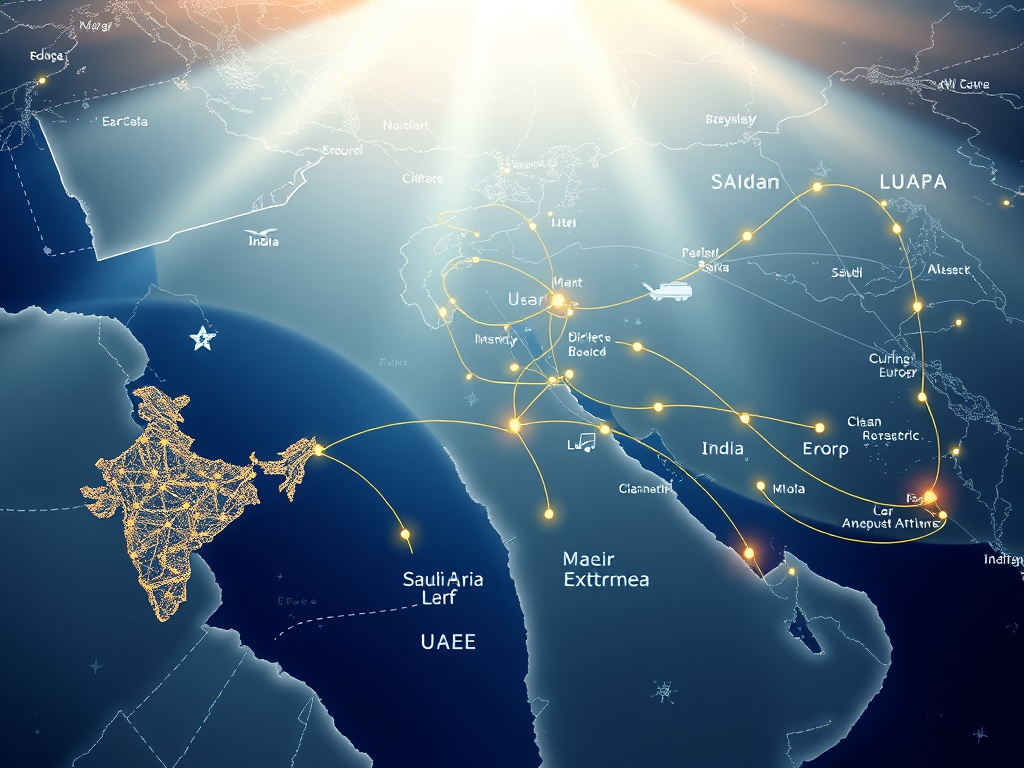
On September 9, 2023, the leaders of India, the United States, the European Union, Saudi Arabia, the United Arab Emirates, France, Germany, and Italy signed a Memorandum of Understanding (MoU) at the G20 New Delhi Summit. This agreement formally launched the India-Middle East-Europe Economic Corridor (IMEC). Washington and New Delhi designed the corridor to offer a transparent, rules-based alternative to China’s Belt and Road Initiative (BRI). The architecture comprises two distinct segments: an Eastern Corridor connecting India’s western seaboard to the Arabian Gulf, and a Northern Corridor linking the Gulf to Europe via overland rail and Mediterranean maritime routes. The core analytical question driving strategic circles today is whether IMEC will function as a commercially viable trade route or if it exists purely as a geopolitical signal to contest Chinese infrastructural dominance.
The ‘Game Changer’
The economic rationale for IMEC relies on hard logistical advantages. The Observer Research Foundation (ORF) estimates that the completed multimodal route will reduce transit times between India and Europe by 40% and cut aggregate logistics costs by 30%. Traditionally, Indian exporters rely overwhelmingly on the maritime route through the Suez Canal, a chokepoint that handles approximately 12% of global merchandise trade. The 2021 grounding of the Ever Given and the ongoing Houthi militant attacks in the Red Sea exposed the severe fragility of this singular maritime artery. IMEC structurally bypasses the Bab-el-Mandeb strait, offering a secure transit vector that mitigates reliance on volatile maritime choke.

The corridor also completely reimagines the concept of connectivity. The participating nations plan to lay high-speed undersea data cables, clean electricity grids, and green hydrogen pipelines alongside the physical rail and port networks. For India, this digital and energy integration directly facilitates the export of IT services and aligns with the Ministry of New and Renewable Energy’s target to establish India as a global green hydrogen hub.
The ‘Geopolitical Signal’
Despite the compelling economic framework, severe geopolitical and structural hurdles currently stall IMEC’s operationalization. The outbreak of the Gaza conflict in October 2023 abruptly froze the diplomatic normalization process between Saudi Arabia and Israel. This normalization represents the foundational political prerequisite for the Northern Corridor, as the overland rail network must seamlessly traverse Saudi, Jordanian, and Israeli territory before reaching the Mediterranean port of Haifa. Structurally, port capacity mismatches threaten the logistical viability of the route. Strategic briefings highlight a severe asymmetry: while the UAE’s Jebel Ali port processes massive global volumes annually, Israel’s Haifa port currently manages a fraction of that capacity. Pushing high-volume Asian cargo, which constitutes over 17% of India’s total exports to the EU, through a restricted Mediterranean bottleneck will inevitably degrade the projected time saving.

Furthermore, the project faces an unprecedented financing deficit. Unlike China’s BRI, which deploys centralized, state-backed capital, IMEC relies on an undefined mix of public-private partnerships. The MoU contains no binding financial commitments. The participating jurisdictions possess vastly different credit profiles, regulatory environments, and rail gauges, making standard private investment highly risky without robust sovereign guarantees.
Parliamentary & Policy Interventions for India
The Parliamentary Standing Committee on External Affairs consistently warns that the growing presence of extra-regional players in the Indian Ocean Region requires India to project credible economic alternatives to counter strategic encirclement. To transition IMEC from a dormant geopolitical signal to an operational game changer, the Government of India and Parliament must execute three specific interventions:
- Fast-Track Western Seaboard Infrastructure: The Ministry of Ports, Shipping and Waterways must prioritize the expansion of Mundra, Kandla, and the Jawaharlal Nehru Port Trust (JNPT) under the Sagarmala framework. The government should mandate the creation of dedicated IMEC-compliant customs and transhipment terminals to ensure seamless ship-to-rail interoperability with UAE ports.
- Establish a Sovereign Financing Vehicle: Parliament should authorize the creation of a dedicated IMEC infrastructure fund anchored by the National Investment and Infrastructure Fund (NIIF). This vehicle must collaborate with multilateral institutions to offer credit guarantees, thereby derisking the project for private institutional capital and bridging the financing deficit.
- Deploy Diplomatic Hedging: The Ministry of External Affairs must simultaneously accelerate parallel investments in the International North-South Transport Corridor (INSTC) via Iran’s Chabahar port. The geopolitical volatility of the Middle East dictates that India cannot afford a single point of failure; hedging ensures trade continuity while Arab-Israeli diplomatic relations remain fractured.
Conclusion
Presently, IMEC operates primarily as a geopolitical signal. It successfully demonstrates the collective political will of India, the United States, and European allies to challenge Beijing’s infrastructural monopoly and rewrite the economic geography of Eurasia. However, until the participating states establish a centralized, binding financing mechanism and the Middle East achieves a baseline of diplomatic stability, IMEC will not function as an economic game changer. The corridor’s ultimate viability depends entirely on executing the complex financial engineering and hard infrastructure development required to transform a G20 memorandum into a living commercial artery.