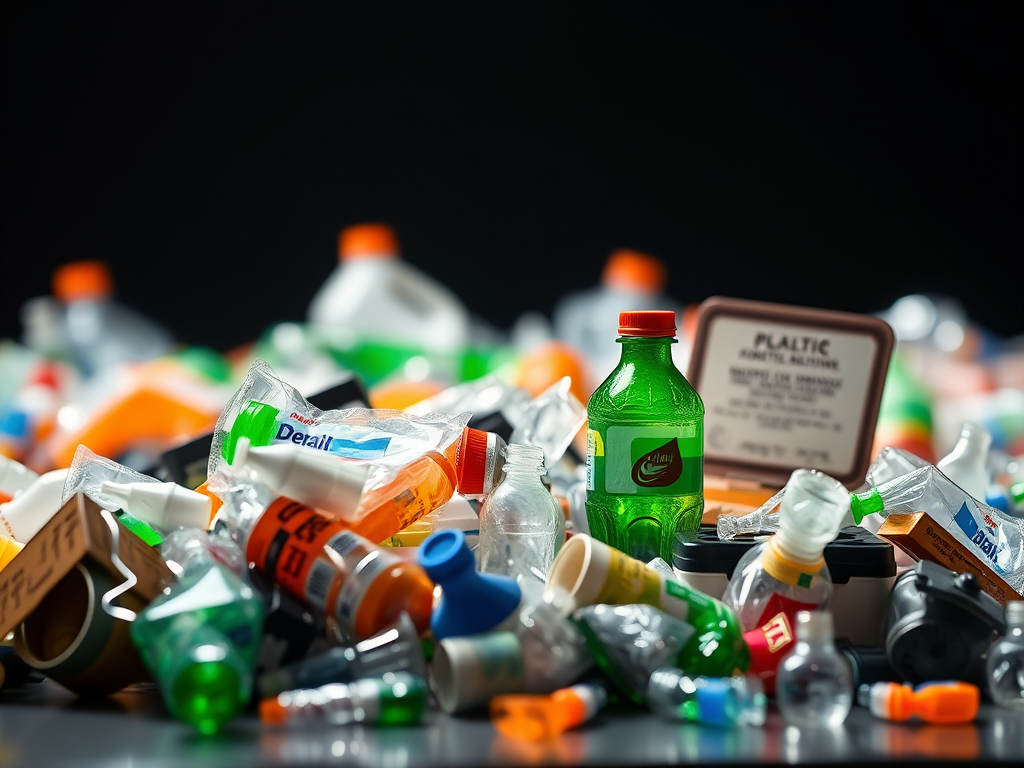
India generates 3.4 million tonnes of plastic waste annually, yet only 60% is collected for recycling due to market failures and inadequate producer accountability. To address this crisis, the Plastic Waste Management (Amendment) Rules, 2022 introduced Extended
Producer Responsibility (EPR), a drastic fiscal intervention that fundamentally restructures incentives through tradeable credit mechanisms, environmental compensation penalties ranging from ₹2,000–₹7,900 per tonne, and public blacklisting of non-compliant entities. This “shock therapy” approach transforms plastic waste from an externalized cost into a direct financial liability for Producers, Importers, and Brand Owners (PIBOs), forcing rapid behavioural shifts. However, challenges persist: 700,000 fraudulent EPR certificates emerged in 2023, while 1.5 lakh informal waste-pickers remain excluded from formal compliance systems. This article examines EPR’s incentive architecture, effectiveness, and critical implementation gaps.
THE MARKET FAILURE : WHY DRASTIC INTERVENTION WAS NECESSARY?
Traditional environmental policies rely on awareness campaigns and voluntary compliance which behavioural economists term “gentle nudges.” For decades, India’s plastic crisis exemplified their limitations. Despite plastic bag bans and awareness drives, mismanagement persisted because producers bore no post-consumer responsibility. The result: 9.3 million tonnes of annual plastic emissions (highest globally), with waste-pickers absorbing social costs while manufacturers captured profits.
Three systemic failures justified aggressive intervention:
- Economic Externalities: Plastic waste imposed ₹1,344 crore annual cleanup costs on municipalities (2022 MoEFCC data), while producers paid nothing for disposal of a textbook negative externality.
- Information Asymmetry: Consumers lacked data on packaging recyclability, preventing market-based solutions. Multi-layered plastics (34% of waste) appeared identical to recyclable PET but contaminated recycling streams.
- Split Incentives: Recyclers earned ₹8–₹12 per kg from recovered material, but collection infrastructure required ₹15–₹20/kg investment making recycling financially unviable without policy intervention.
THE DRASTIC INCENTIVE MECHANISM : HOW EPR CREDIT TRADING WORKS
A. The Credit Trading System
PIBOs introducing plastic packaging must achieve mandatory targets: 100% collection by 2024-25, rising to 90% recycling by 2030. Compliance occurs through:
- Physical Collection: Direct partnerships with registered recycler
- Credit Purchases: Acquiring EPR certificates from Plastic Waste Processors (PWPs) at market-determined prices (₹0.50–₹2.00 per kg as of January 2026)
- This creates a quasi-market for waste management. A PIBO introducing 10,000 tonnes of PET bottles must either:
- Collect/recycle 10,000 tonnes physically, OR
- Purchase equivalent EPR credits (₹50 lakh–₹2 crore at current rates
B. Environmental Compensation
Non-compliance triggers Environmental Compensation (EC) a penalty levied at ₹2,000–₹7,900 per tonne of shortfall, deposited in escrow accounts for waste infrastructure projects. Unlike traditional fines, EC functions as a “polluter-pays” mechanism:
Example: A company with a 5,000-tonne deficit faces ₹2.5 crore EC (at ₹5,000/tonne). If compliant within one year, 75% is refunded; after three years, funds are forfeited to municipal recycling projects.
C. Additional Deterrents
- Public Blacklisting: Annual listings of non-compliant entities on CPCB’s website reputational damage in markets where 70% of consumers prefer sustainable brands.
- Business Closure: 551 plastic units shut down in Delhi alone (2023) for unregistered operation
- Credit Deregistration: Suspension of manufacturing licenses for repeat violators
| Violation Type | Penalty Range | Additional Consequences | 2025-26 Cases |
| Target Shortfall (per tonne) | ₹2,000–₹7,9 00 | 75% refund if compliant within 1 year | 1,200 notices |
| Unregistered Operations | ₹1,00,000–₹ 5,00,000 flat | License suspension | 500+ entities |
| Fraudulent Certificates | ₹10,00,000– ₹15,00,000 | Criminal prosecution possible | 700,000 fake certificates detected |
| Late Reporting (per day) | ₹10,000/day | Compounding until submission | 30% of PIBOs |
| Business Closure Order | Production halt | Permanent closure for egregious violations | 551 units (Delhi, 2023) |
CRITICAL IMPLEMENTATION GAP
A. Informal Sector Exclusion
India’s 1.5 lakh waste-pickers recover 60–70% of recyclable plastics, yet EPR credits flow only to registered PWPs. This creates perverse incentives:
- Waste-pickers sell to informal aggregators at ₹10–₹12/kg
- Formal recyclers claim EPR credits worth ₹25–₹30/kg for the same material
- Result: ₹15–₹18/kg value captured by middlemen, not primary collectors
- Solution: The NAMASTE scheme (launched 2025) proposes direct e-Shram registration of waste-pickers, enabling them to issue EPR credits. Pilot studies in Pune showed 25% income increases when waste-pickers accessed formal credit systems
B. Compliance Burden on MSMEs
Annual reporting requires ISO-certified audits (₹50,000–₹2,00,000), disproportionately affecting small producers. Of 50,000 registered PIBOs, only 9% are large manufacturers yet they generate 65% of plastic packaging. Streamlined “deemed compliance” frameworks for less than 5 tonne producers could reduce administrative costs by 40%.
C. Technology Gaps
Only 30–40% of households practice source segregation, rendering QR-code traceability ineffective. IoT-enabled bins achieved 70% segregation rates but require ₹15,000–₹25,000 per unit prohibitive for most municipalities.

RECOMMENDATIONS
Drastic incentive changes force rapid behavioural adjustment, powerful but potentially disruptive. Timing and calibration determine success or backlash. Four evidence-based refinements:
- Eco-Modulated Fee Structure: The current “one-size-fits-all” approach does not distinguish enough between good and bad plastics. The document suggests tweaking the targets based on recyclability. For instance, it is suggested to set higher EPR targets (70%) for difficult-to-recycle multi-layered plastics, while keeping targets lower (50%) for mono-materials. By making compliance cheaper for easily recyclable materials like PET and HDPE, companies get a financial reason to switch. This change alone could shift the market 20–30% toward sustainable packaging within just two years.
- Public Procurement Mandate: To stabilize the market, the government needs to become a primary customer. The recommendation is to require that 30% of all government supplies contain recycled plastic by 2027. This creates a guaranteed demand for recycled material, which takes the volatility out of the market. With this steady demand, EPR credit prices would likely stabilize between ₹1.50 and ₹2.00 per kg, making the business model viable for recyclers.
- Blockchain-Enabled Traceability: With seven lakh fraudulent certificates detected in 2023, trust is a major issue. Moving the credit issuance system to a blockchain ledger creates a permanent record that cannot be edited or faked. Platforms like Ecoex are already showing the way, with 70% of their 2025 credits being verified this way. This tech fix reduces fraud and gives investors the confidence they need to put money into the EPR market.
- Differentiated Compliance Timelines: Treating a giant corporation and a small family business the same way isn’t working. The proposal suggests a staggered timeline: large producers (over 1,000 tonnes) must hit 100% targets immediately (2024-25). However, smaller MSMEs (under 50 tonnes) should be given a “ramp-up” period, aiming for 80% compliance by 2027-28. This balances the need for strict environmental goals with the administrative reality of running a small business.
| Country | Mechanism | Collection Rate | Key Innovation | India Applicability |
| Germany | Mandatory deposit-refund (€0.25/botte) | 98% (PET bottles) | Consumer-paid upfront | Limited—informal sector reliance |
| South Korea | Government-subsidized recycling + 75% targets | 86% (overall plastics) | State-funded infrastructure | High—aligns with NAMASTE scheme |
| Canada (Ontario) | Producer-funded Blue Box program | 73% (packaging waste) | Municipal partnership model | High—Delhi piloting similar MRFs |
| India (EPR) | Credit trading + Environmental Compensation | 60% (2024-25) | Market-based digital platform | Indigenous innovation—needs fraud controls |
Conclusion
Extended Producer Responsibility represents the sixth rung of India’s environmental intervention ladder deploying drastic fiscal instruments when voluntary compliance fails. By transforming plastic waste into a ₹1.7 billion credit market backed by penalties up to ₹7,900 per tonne, EPR has driven collection rates from 40% (2021) to 60% (2025). However,
success remains incomplete. Fraudulent certificates, exclusion of 1.5 lakh waste-pickers, and infrastructure gaps in tier-2 cities reveal that shock therapy requires careful calibration. The Supreme Court’s 2026 pricing reforms, NAMASTE scheme integration, and blockchain
adoption offer pathways to effectiveness. As behavioral economics teaches, drastic incentives work—but only when enforcement is credible, markets are transparent, and all stakeholders share in the economic transformation. India’s EPR experiment will either validate aggressive fiscal intervention as a replicable model for the Global South or serve as a cautionary tale of rushed implementation.