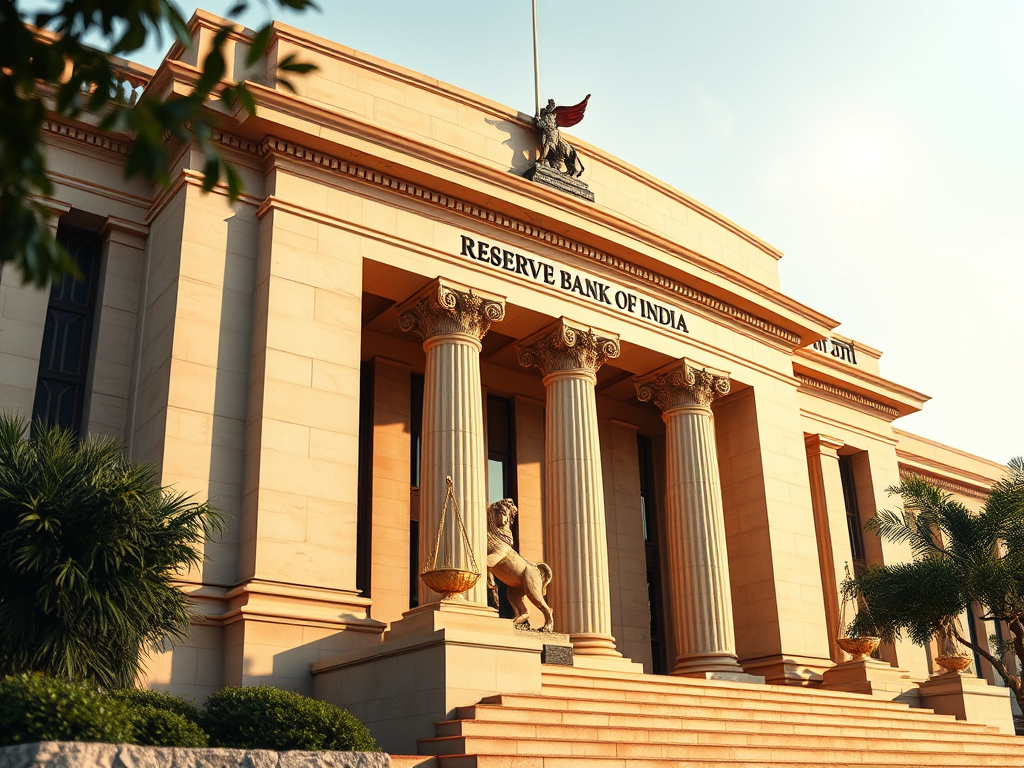
Independence of the Central Bank, or the Reserve Bank in the case of India, is the degree to which a country’s central bank can make decisions without direct political or governmental pressures. The role of formulation and implementation of monetary policy, in India, lies with the Reserve Bank of India, or the RBI. The RBI was established through the Reserve Bank of India Act of 1934, with the objective of regulating the issuance and supply of the Indian
Rupee and having control over India’s financial and monetary system. The RBI also provides the statutory foundation for the bank and its functions. In 2016, the act was amended to institutionalise a six-member body, the Monetary Policy Committee, with the responsibility of fixing repo rates to maintain inflation. These members are appointed by the Central Government for a period of four years. While the government sets the inflation rates with consultation with the RBI every five years, it is the RBI that has the operational independence in how it achieves that target.
Position Statement and Reasoning
Independence here, however, does not mean total independence. The principal reason why direct government intervention is limited lies in the different motivations faced by political authorities and monetary technocrats. For instance, governments often face pressure before elections that might favour short-term goals, like reducing interest rates ahead of elections.
This act might have dire consequences and result in inflation. Using the central bank’s ability to create money and control interest rates for short-term gains can seriously harm the economy in the long run. Similarly, letting large inflows of foreign money may temporarily ease financial pressures, but a sudden stop may result in the collapse of the exchange rate system. Autonomy not only strengthens public trust but also allows the RBI to respond swiftly to economic shocks, such as during COVID-19, as action towards liquidity support and rate adjustments is necessary for stabilising financial markets. Thus, short-term economic boosts created by weak oversight and easy credit often result in inflation and a financial crisis, which prove to be major reasons as to why the government follows the principle of strategic inaction. To prevent such harm from happening, this necessitates an independent and cautious monetary policy.
Monetary Policy Update of April and June 2025 stated that the Monetary Policy Committee decided to lower the repo rate to balance inflation, highlighting that the decision was taken keeping in mind the conditions and growth of the economy.

According to the estimates of the National Statistics Office, real GDP growth accelerated to 7.4% in Q4 of 2024-25, while real Gross Value Added rose at 6.8% in Q4 of 2024-25. For the entire year 2024-25, the GDP growth rate was at 6.5% and the GVA growth at 6.4%.
For 2025-26, Real GDP Growth is projected at 6.5%.
| Quarter 1 | 6.5% |
| Quarter 2 | 6.7% |
| Quarter 3 | 6.6% |
| Quarter 4 | 6.3% |
| Quarter 5 | 6.5% |
The main aim of lowering the repo rate was to achieve the medium target of 4% Consumer Price Inflation. The RBI projected CPI inflation to be at 3.6% for FY 25-26, and real GDP growth at 6.5%.

Inflation rates slowed in the initial months of 2025, mainly due to the sharp drop in food prices. With uncertainties over the easing harvest of Rabi, food inflation is likely to decline further. Additionally, lower crude oil prices have improved the overall disinflation outlook.
As a result, CPI inflation for 2025-26 is expected to be at 4%, with quarterly projections of 3.6% in Q1, 3.9% in Q2, 3.8% in Q3 and 4.4% in Q4.This illustrates how the RBI’s monetary policy decisions are guided by detailed assessments of macroeconomic conditions. Such data-driven decisions, rooted in broad economic indicators, demonstrate the operational autonomy of the RBI
Critics point out that total independence without responsibility is harmful for a democracy. Critical scholars argue that if a central bank works entirely independently without oversight, it would resemble a technocratic authority without democratic legitimacy. Therefore, they are in support of a nuanced balance where technical independence coexists with democratic oversight. While the independence of the central bank is important, accountability must lie with the government as it is answerable to its people. Periodic debates over the independence of the RBI exist, which highlight the need for a balance between accountability and autonomy.
Recommendations
- Adoption of a merit-based selection process for the positions of the RBI Governor and external members of the Monetary Policy Committee (MPC), to enhance transparency and credibility. To enhance their independence, the tenure of RBI officials or board members should be protected against arbitrary removal.
- Separation of India’s debt management function from its monetary policy. Such a separation would enhance RBI’s autonomy and reduce fiscal influence on monetary decisions.
- Defining clearly when government directions can be required and communicating the same to the public. Section 7 of the RBI Act empowers the government to issue directives to the RBI in public interest, with prior consultation with the Governor of the RBI.
- Clearly communicating with the public regarding its roles and responsibilities, clear interpretation and articulation of its objectives are some of the goals of RBI’s Communication Policy, for its effective functioning. Well-informed citizens reduce pressure on both the RBI and the government.
- Preventing monetary policy from short-term political pressures, as it undermines autonomy. By adopting a conservative approach, the regulator promotes long-term financial stability.
- Improving the coordination between the RBI and the Finance Ministry in sharing projections, without political pressures. Monetary and fiscal policies must work together to address issues around growth and inflation.
Thus, in terms of monetary policy, the autonomy of the RBI ensures that decisions are based on economic criteria rather than political pressures. This enhances credibility in the markets, builds trust among people and promotes stability. However, this autonomy is not absolute- the government is responsible for setting inflation targets but does not play a role in operationalising them. Ultimately, well-structured independence, with checks and balances, strengthens both democracy and its economy.