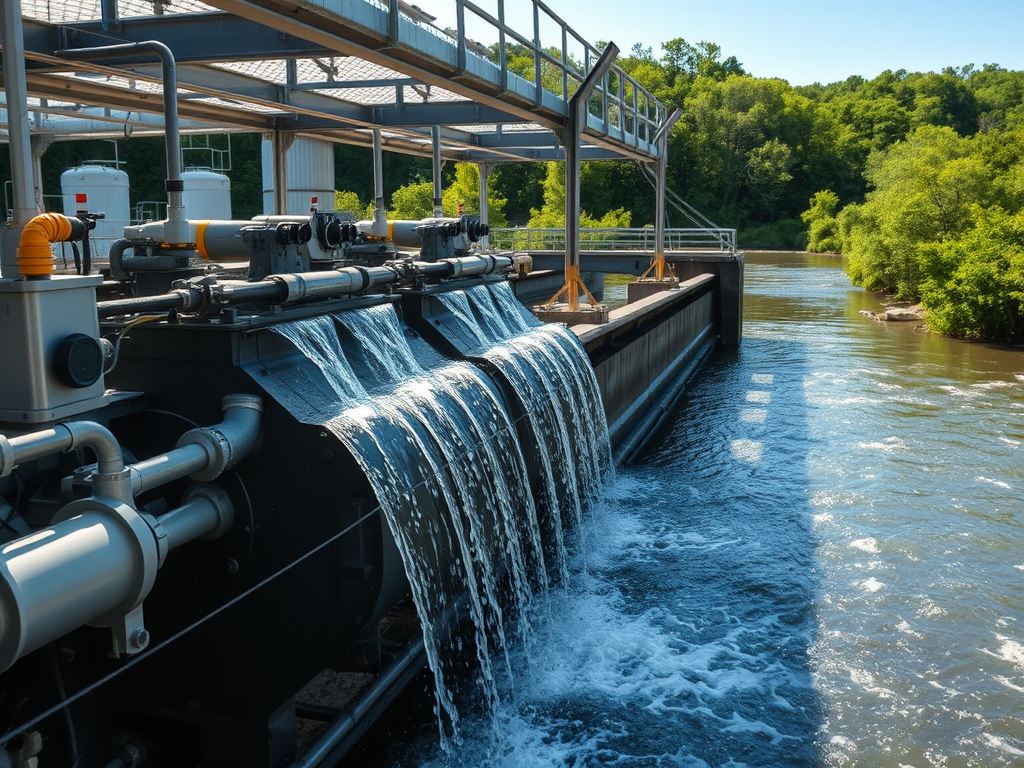
Effluent Treatment Plants (ETPs) serve as critical infrastructure in mitigating river pollution from industrial wastewater discharges. These engineered systems remove or reduce pollutants before their release into natural water bodies, preventing ecological damage and safeguarding public health.
Industrial wastewater contains complex contaminants including organic matter, nutrients, heavy metals, and emerging pollutants such as microplastics and pharmaceuticals. ETPs employ physical, chemical, and biological processes tailored to specific industrial effluent characteristics. Case studies demonstrate impressive removal
efficiencies chemical oxygen demand (55.7 to 64.0%), ammonium nitrogen (63.1 to 89.4%), and total phosphorus (27.6 to 76.7%) which leads to measurable improvements in river water quality. Despite their essential role, ETPs face challenges including inconsistent operation in small enterprises, limitations in removing emerging contaminants, and sludge management issues. Addressing these limitations requires integrated solutions which are stricter environmental policies, technological innovations, continuous monitoring, and resource recovery approaches aligned with circular economy principles.
Policy Position
We strongly support mandatory implementation and enhanced regulation of ETPs across all industrial sectors discharging wastewater into river systems. ETPs are indispensable tools in protecting aquatic ecosystems and must be integrated within a comprehensive water management framework that includes strict compliance monitoring, technological upgrades for emerging contaminants, financial support for small and medium enterprises (SMEs) and promotion of resource recovery and circular economy practices. Current evidence demonstrates that properly operated ETPs significantly reduce pollution loads and improve downstream water quality. However, gaps in enforcement and technological capacity undermine their effectiveness, particularly regarding microplastics and pharmaceutical residues. Policy interventions must address these limitations while supporting sustainable operational models.
Evidence and Analysis
The Pollution Challenge
Industrial wastewater represents a major contributor to river degradation worldwide. Textile industries discharge effluents with high chemical oxygen demand (COD), color, sulfates, and heavy metals. Pharmaceutical effluents contain complex organic compounds, while pulp and paper mills generate substantial quantities of wastewater and sludge. Without proper treatment, these pollutants severely degrade river water quality, leading to oxygen depletion, ecosystem disruption, and health risks to humans and wildlife.
The concept of Biochemical Oxygen Demand (BOD) is crucial here. High BOD levels indicate significant organic pollution that consumes dissolved oxygen, creating hypoxic conditions detrimental to aquatic life. Studies from Bangladesh have evaluated ETP performance across pharmaceutical factories, steel-galvanizing industries, and textile dyeing industries, demonstrating their capacity to significantly improve wastewater quality before discharge.
How ETPs Work
ETPs employ a multi-barrier approach combining physical, chemical, and biological processes. Physical treatment involves screening, sedimentation, and flotation to remove suspended solids. Chemical processes include coagulation-flocculation, neutralization, and advanced oxidation processes (AOPs). Biological treatment utilizes microbial communities to decompose organic waste and remove nutrients like nitrogen and phosphorus. Modern ETPs increasingly incorporate advanced techniques such as nanofiltration for enhanced treatment and resource recovery.
Proven Effectiveness
Multiple case studies validate ETP effectiveness. In southern China, bypass ecological treatment systems treating
WWTP ( Waste Water Treatment Plant ) effluents achieved removal efficiencies of 55.7 to 64.0% for COD, 63.1 to 89.4% for ammonium nitrogen, and 27.6 to 76.7% for total phosphorus, demonstrably improving downstream river water quality. Enhanced phosphorus effluent standards from WWTPs have improved river water quality in regions like South Korea’s Geum River watershed. An ETP study in a polyester textile dyeing industry analyzed efficiency in reducing 18 physico-chemical parameters and eight heavy metals over one year, showing consistent performance.
| Pollutant Parameter | Removal Efficiency (%) | Source |
| Chemical Oxygen Demand (COD) | 55.7 – 64.0% | Southern China WWTPs |
| Ammonium Nitrogen | 63.1 – 89.4% | Southern China WWTPs |
| Total Phosphorus | 27.6 – 76.7% | Southern China WWTPs |

Current Limitations
Despite proven effectiveness, ETPs face several critical challenges. Inconsistent operation and non-compliance remain significant issues, particularly in small and medium enterprises (SMEs) that struggle with treatment costs. This leads to continued discharge of inadequately treated effluents. Conventional ETPs are not always effective in removing emerging contaminants such as microplastics and certain pharmaceuticals. For instance, microplastic
particles are emitted from WWTP effluents into river networks, highlighting gaps in current treatment capabilities.
Additionally, the treatment process generates sludge requiring further management. Textile ETP sludge poses challenges due to low carbon-to-nitrogen ratios and heavy metal content .The energy intensity of some treatment processes and lack of real-time monitoring further hinder optimal performance.
Actionable Recommendations
- Strengthen Regulatory Enforcement- Implement stricter environmental policies and compliance monitoring systems. The Emission Trading Pilot Scheme (ETPS) in China has demonstrated effectiveness in reducing firms emissions intensity. Policymakers should establish real-time monitoring requirements, regular inspections, and penalties for non-compliance. Environmental protection taxes can incentivize industries to reduce pollution effectively.
- Support Technological Innovation- Promote research and adoption of advanced treatment technologies targeting emerging contaminants. This includes nanofiltration, advanced oxidation processes, and green-solvent-processed nanofiber membranes for enhanced treatment. Internet of Things (IoT) systems for remote control and monitoring of treatment processes can significantly enhance efficiency and compliance. Government incentives should support technology upgrades, particularly for SMEs.
- Develop Sustainable Mini-ETPs for SMEs- Create accessible, cost-effective ETP solutions specifically designed for small industries. Establish subsidy programs, technical assistance centers, and shared treatment facilities to reduce individual operational costs. Kaizen approaches focusing on continuous improvement can enhance ETP procedures without major capital investments.
- Promote Circular Economy Practices- Encourage resource recovery and wastewater reuse from ETPs. Treated wastewater can be reused for industrial processes, irrigation, or municipal applications such as washing incineration bottom ash. Anaerobic digestion can treat textile ETP sludge, improving environmental quality while generating biogas for energy recovery. Policy frameworks should incentivize circular economy approaches through tax benefits and recognition programs.
- Integrate Ecological Engineering Approaches- Incorporate nature-based solutions as complementary treatment systems. Utilizing aquatic plants like water hyacinth and water lettuce for polishing treatment of conventionally treated wastewater offers environmentally sustainable, low-cost approaches. These systems can improve ecosystem resilience and recovery trajectories of biofilms in receiving rivers following ETP upgrades.
- Enhance Data-Driven Management- Deploy comprehensive monitoring systems and utilize predictive modelling tools such as the Soil and Water Assessment Tool (SWAT) to understand nutrient transport patterns and attribute pollutant sources in complex river basins. This enables development of targeted pollution control strategies and optimal best management practices. Real-time data should inform adaptive management decisions and regulatory responses.
Conclusion
ETPs are indispensable tools in protecting river ecosystems from industrial pollution. Their effectiveness in removing conventional pollutants is well-documented through multiple case studies showing substantial reductions in COD, nutrients, and heavy metals. However, maximizing their impact requires addressing current limitations through integrated policy approaches.
Success depends on a comprehensive framework combining regulatory enforcement, technological innovation, financial support for SMEs, and circular economy principles. Policymakers must act decisively to strengthen ETP requirements, support technology upgrades, and promote sustainable water management practices. Only through this holistic approach can we achieve long-term improvements in river water quality and safeguard aquatic ecosystems for future generations.