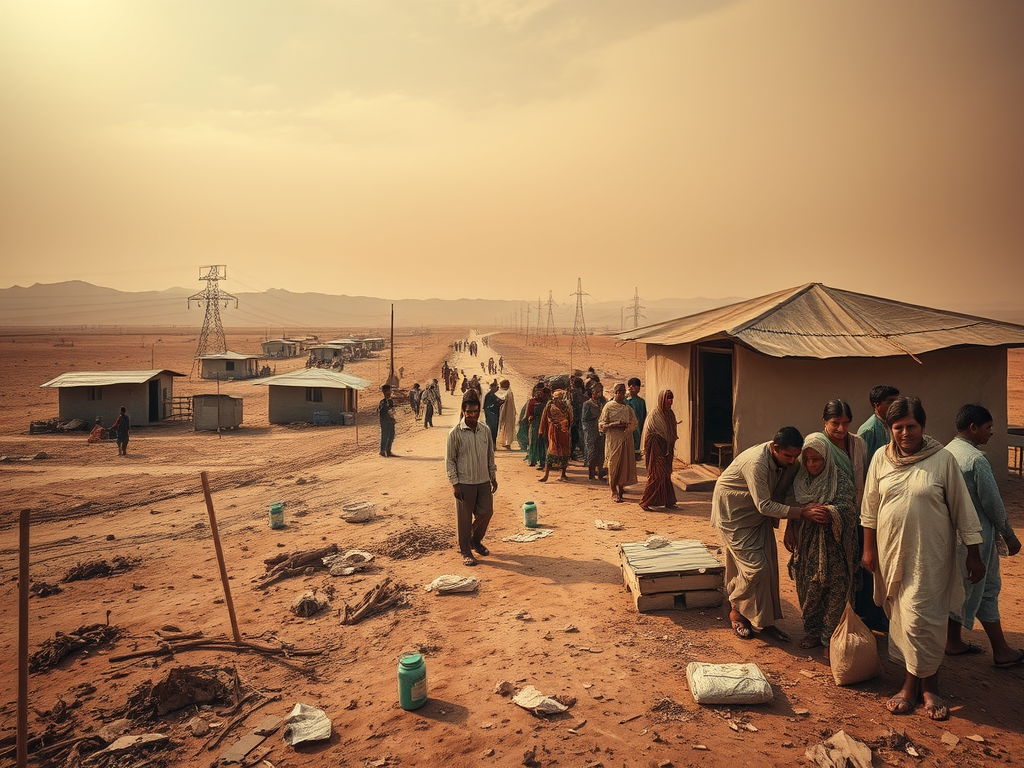
Climate change since the past few decades, has transitioned from being a mere environmental concern to a major public health, economic and social crisis, particularly in developing countries. Despite contributing the least to global greenhouse gas emissions, developing,
low-income and vulnerable countries have to bear the adversities such as heatwaves,
infectious diseases, food insecurity, etc. due to weak health infrastructure. Countries like South Asia and Sub-Saharan Africa experience the most severe climate impacts and are
therefore the least able to cope and respond to climate threats. According to a 2023 World Health Organisation report, 3.6 billion people live in areas that are highly susceptible to climate change and several others are exposed to heat stress, hunger, water scarcity and several diseases. Between 2030 and 2050, it is expected that climate change will cause approximately 2,50,000 deaths per year.

Impacts on Public Health
Rising temperatures globally are intensifying heatwaves. The 2025 Lancet Countdown Report illustrates that heat-related mortality has risen by 23% since the 1990s, pushing the total number of heat-related deaths to an average of 5,46,000 deaths annually. Among those over 60 years of age, heat-related deaths have risen by 70% in two decades, exacerbating health risks across vulnerable populations. Warmer temperatures have also altered rainfall patterns, accelerating the spread of vector-borne diseases. If preventive actions are not taken, then the number of deaths will increase, affecting both rural and urban populations in developing countries. Climate variability also threatens access to clean water. Data published by the WHO indicates that climate stressors have increased the risks emerging from waterborne and foodborne diseases such as cholera and typhoid. Around 2 billion people lack safe drinking water, and 600 million suffer from foodborne illnesses annually. In 2020, 770 million, mainly in Asian and African countries.

The economic tolls of climate change also directly affect health and livelihoods. In bangladesh for instance, rising heatwaves contributed to health problems like diarrhoea, respiratory problems, fatigue and mental health issues like depression and anxiety, lost productivity and reduced labour output, particularly among women and older people.10 Economic losses caused by the impacts of climate change strain the national budget of already resource-constrained and low-income countries.
Pressure on Healthcare Systems
Climate shocks strain health infrastructure further in developing countries, and decreases capacity to provide Universal Health Coverage to all. For instance, floods in South Asia have frequently caused damage to rural health centres, high spread of diseases results in overcrowded hospitals, shortages of beds and medicines and severe burnout among
healthcare workers. Developing countries are already faced with a limited number of doctors to a high number of patients, inadequate ICU facilites etc., and climate change further amplifies these weaknesses. Extreme weather events like floods, droughts, rising sea levels and cyclones disrupt medical services, damage facilities and infrastructure and impede access to care, especially in regions where facilities and systems are very weak. Moreover, hospitals depend on reliable electricity and a clean water supply. Climate disruptions can cut power supply and contaminate water. Backup options are also weak or nearly absent in such countries.
As the largest financier of climate, the World Bank works towards increasing its investments in climate-health action. The World Bank provides support to countries by-
- Strengthening health systems for efficiency by building climate-informed surveillance and early-warning systems.
- Increasing the capacity of the health workforce and climate-proofing healthcare infrastructure.
- Transform the health system to low-carbon, high-quality service delivery through clean and renewable energy for infrastructure. This is critical as the health sector is not only vulnerable to climate change, but also a major contributor towards it.
The World Bank has already made progress by investing in climate-related health infrastructure, and by working for it in countries like Indonesia, Sierra Leone and Nigeria.
| Heat-Related Mortality | Increased by 23%, deaths among the elderly over 60 increased by 70% |
| Climate-Related Deaths | WHO estimates that 2,50,000 deaths per year are due to malnutrition, malaria, and heat stress between 2030 and 2050 |
| Vector-Borne and Water-Borne Diseases | Transmission of dengue and malaria, and cholera and diarrhoea due to warming temperatures |
| Food Insecurity | Linked to crop failures, millions are exposed to food insecurity |
| Access to Safe Water | Approximately 2 billion people lack safe drinking water |
Recommendations
- Climate change should be recognised as a public health emergency because of its far-reaching and profound consequences on human health.
- Include Health in Climate Action Plans by proposing priority actions such as committing to health recovery, asserting that health is non-negotiable and creating energy systems that protect and improve climate and health.
- Strengthen the climate resilience of health systems and set up health plans to help citizens cope with the consequences of climate change.
- Inclusion of mental health support and health inequalities in response to the climate crisis, as climate-related crises affect people both physically and mentally.
- Educating people and ensuring mechanisms for active transport measures like walking or cycling to reduce air pollution and improve health, and the establishment of climate-resilient water, sanitation and hygiene (WASH) infrastructure to prevent water-related illnesses and provide awareness on the same to the citizens.
- Increasing governments’ commitment of public funds to climate-health adaptation by ensuring a multisectoral approach, thereby linking health with water, agriculture, urban planning, etc., in order to foster collaboration between relevant sectors of government
Addressing climate change requires climate-resilient health systems, investments in water and sanitation infrastructure, protection of vulnerable populations and meaningful international climate finance. It is important that public health is placed at the centre of climate negotiations and strategies. If we fail to integrate health into climate policy, decades of developmental gains in low-income or developing countries will come down to zero Ensuring climate justice is thus not just about reducing emissions, it is about safeguarding lives and securing a healthier and equitable future for the most vulnerable groups of people that exist around the world.