India is one of the world’s fastest growing economies and the third largest emitter of CO2 from fuel combustion. It participated in the Paris Agreement 2015, and as part of it submitted its Internally Nationally Determined Contributions (INDC) to the United Nations Framework Convention on Climate Change (UNFCCC), which was then updated and submitted in August 2022. The submission was made in response to COP decisions 1/CP.21, which urges the parties to update their NDCs every five years. It outlines India’s climate
actions for the period 2021 to 2030, wherein India pledged to reduce the emissions intensity of GDP by 45% by 2030 (from 2005 levels), achieve 50% non-fossil fuel-based electric power capacity by 2023, and create an additional carbon sink of 2.5 to 3 GtCO2e. India updated these targets following the “Panchamrit” pledges announced at COP26.
The current climate crisis and the international response to it puts India at a crossroads; on one hand it has to run the marathon of development and on the other hand it must do its part in curbing the global levels of Global Greenhouse Gas(GHG) emission to meet the target of
1.5°C temperature limit. Understanding India’s position however, requires it to be put in the historical context. Since the Industrial revolution (1850-2019) its contribution to accumulation of GHGs is only 4% despite its development trajectory and the population size (~17% of the world population), while the developed world’s contribution has been 10 times higher as per the IPCC’s Sixth Assessment Report. Despite this, as a developing country it faces the brunt of the climate crisis and is thus, finding ways to have a greener growth trajectory, compared to the developed world.

BACKGROUND OF INDIA’S INDC
India’s INDC can be pinned by two policy pillars
- Common But Differentiated Responsibilities (CBDR-RC): where India pursues its development goals while staying within the constraints of their fair share of the carbon budget; and
- Mission LiFE (Lifestyle for Environment): which is a pro-people and planet strategy to combat climate change, which directs collective action towards mindful and deliberate utilisation of resources

The targets further can be bifurcated into conditional and unconditional goals. For conditional goals, India demands necessary international assistance. Unconditional goals are ones that the nation plans to achieve using domestic resources, however, upon a closer textual look, financial help is implied.
India’s Conditional and Unconditional Climate Goals
| Type | Key Dependency |
| Unconditional | Achieved through domestic policy and resources. |
| Conditional | Contingent upon international technology transfer and low-cost finance, including the Green Climate Fund (GCF) |
| Conditional | Viewed as a long-term transition requiring trillions of dollars in international finance and support |
ISSUES
- As per the Climate Action Tracker (CAT) rate India’s overall climate action “Highly insufficient”. The CAT report states that India is drifting away from the 1.5˚C aligned pathway, and shows increasing emission with each subsequent report. To be 1.5°C compatible, India’s unconditional targets would need to aim for absolute emissions reductions of 106% above 2005 levels, rather than the intensity-based reductions currently pledged.

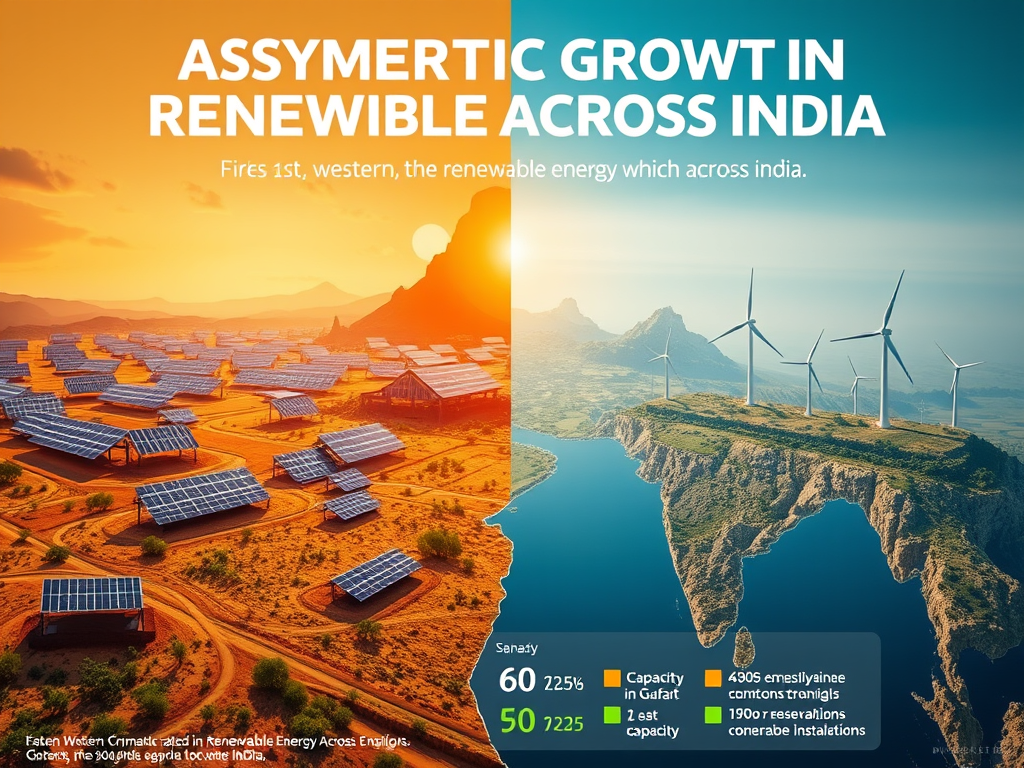
- A major shortcoming lies in the distinction between “installed capacity” and “actual electricity generation.” India reached its 50% non-fossil fuel installed capacity target five years ahead of schedule.11 Despite this capacity growth, the actual share of renewables in electricity generation has remained stagnant at approximately 20–25%. To be 1.5°C compatible, renewables must contribute 52–65% of actual generation by 2030.
- Despite the rapid rollout of renewables, India’s heavy reliance on coal remains a critical structural shortcoming. Coal production hit a record one billion tonnes in FY 2024–25, while it continues to power nearly 75% of the country’s electricity. New coal plants under construction risk locking in carbon-intensive infrastructure for decades, and government policies are expanding fossil gas use in residential and power sectors often misleadingly branded as a “clean” alternative.

- India’s transition to a low-carbon economy faces significant hurdles due to inadequate international cooperation. Developing nations require an estimated $5.3–5.9 trillion to fulfil their Nationally Determined Contributions (NDCs), with India alone needing $2.5 trillion by 2030 and up to $12.4 trillion for a complete net-zero shift by 2070.15 Pledges from developed countries, such as the $100 billion annual climate finance commitment, remain largely unmet, and what funding does materialize is predominantly loans rather than grants, exacerbating India’s fiscal pressures. Compounding this, technology transfer has stalled despite India’s repeated submissions of needs; barriers like stringent Intellectual Property Rights (IPR) and prohibitive costs prevent effective access under the current global framework.

POLICY RECOMMENDATIONS
- India should consider transitioning from its current intensity-based targets to a national, economy-wide absolute GHG emissions target for its 2035 NDC. This would improve accountability, enable robust tracking, and align with global calls for comprehensive mitigation commitments. Experts suggest replacing the non-fossil capacity target with a generation target, as capacity does not always translate directly into actual renewable energy use. For 1.5°C compatibility, renewables should contribute to 52–65% of actual generation by 2030. India should also communicate its carbon sink targets with a corresponding base year to increase transparency and allow for better evaluation of its overall mitigation efforts.
- To avoid locking in carbon-intensive infrastructure, India should implement a plan for an early and just coal phase-out, aiming to reduce coal’s share in generation to 17–19% by 2030 and effectively phasing it out by 2040. Addressing the intermittency of renewables is a critical priority. India needs to scale up energy storage systems like pumped hydro and advanced batteries and invest in transmission upgrades to ensure renewables can reliably displace coal. Phasing out fossil fuel subsidies which remain significantly higher than those for renewables and redirecting that financial support toward clean energy and “just transition” measures would accelerate decarbonisation.
- To enable wider adoption in the 4-wheeler segment where sales remain low India must expand public charging infrastructure beyond the current 25,202 stations. Cities should adopt a climate-sensitive approach by increasing green space per capita and incorporating smart solutions like waste-to-energy and climate-resilient building codes.